Last night I was invited to a VIP showing of the new film Stan & Ollie by my good friend Ross Owen (who was a consultant and knowledge expert on Laurel and Hardy for the film). And what a privilege it was to see it.
For years, I have been a golden age film fan, but that has chiefly been in the realm of silent cinema and less to do with sound pictures. I like Charlie Chaplin, Buster Keaton and Harold Lloyd because they combined charm and humour with a ridiculous slapstick style that you usually only see in cartoons. So I have been less inclined towards golden age cinema of the 30’s-50’s, so this film has really honed in on my interest in that area.
Do you remember the film known as The Artist from 2011? What that film done was bring silent cinema back to the public consciousness. In that sense, Stan & Ollie, for all intents and purposes, strives to bring the golden age of sound comedy cinema back to the public consciousness and bring a new generation closer to this incredibly simple and beautiful double act. Starring Steve Coogan (Stan Laurel) and John C. Reilly (Ollie Hardy), the film’s plot surrounds the two actors in a period of time where they struggle to maintain a certain relevance among new and rising stars such as Norman Wisdom and Abbot Costello. They embark on a gruelling comedy tour all around (including Glasgow) in order to raise funds for a new film project in the works. But the plans don’t all work out in the end and the rapport between Stan & Ollie is strained when the two of them disagree on creative decisions they made 16 years previously.
The comedy in this film is stellar. A particular highlight was that Stan’s wife would keep taking alcohol away from him to help with his abstinence, but took no notice of her own drinking in the process. Their wives formed a double act all their own, and could arguably be seen as funnier than the main duo in some instances. The choreography for scenes, such as the Ollie in hospital bed scene and the scene where they are both at a train station and can’t find one and another is simply fantastic. It is not overly a biopic, but some elements can feel like that. You get a sense that Stan was the driving force behind their act and that Ollie was the one that could bounce ideas back off Stan. Although their relationship was strained when work was tough, the film is keen to point out through several different encounters, that the duo are still as strong as ever.
On top of the humour perfectly encapsulated in the film through acting, direction and writing, there is a height of poignancy, especially at the end when Ollie hits hard with health problems. But the show has to go on.
Out of all the films I have seen this decade, I have never been more touched and tickled by a film as I was this one. The art direction, acting and script were phenomenal and Ross Owen’s knowledge is a testament to the power and authenticity of the piece. It is a truly refreshing film in a cinema world where we often got hogwash and uninspired works. Highly recommended for classic film buffs, and film fans all over.
Monday, 7 January 2019

Friday, 3 February 2017
T2: Trainspotting (Warning: There are Some Spoilers Ahead)
Now, 20 years later, we return to Edinburgh. The characters - Renton, Spud, Sick Boy, and Begbie - are just as we remember them with the obvious age setting in. The first thing I thought of (and something that still kind of resonates with me) is how relevant was it for Danny Boyle to make a sequel to the original? The original left off on an awesome ending. Sure, Renton betrayed his friends, but you can understand why he done it to an extent since it could have been any one of his friends who did that to him anyway. First, there is an opportunity... then there is a betrayal.
The very fact he moved on was an intriguing development. His return in this film sparks a nostalgic journey for the most part with many call backs to the first film. Thankfully, even though I don't think it reaches the same heights that the predecessor set, it was still a pretty good film in its own right, and I actually enjoyed it.
The film introduces a new character called "Veronica" who is Sick Boy's supposed girlfriend. He has been using her to hustle clients with sexual activity in order to bribe them by filming it and threatening to disgrace them. In the case of Begbie (played by Robert Carlyle. I reviewed his acting in my Barney Thomson review), his dangerous personality has been caged in prison until he lets one of his pen pals stab him in order for him to get transferred to Hospital and attempt his subsequent escape. Spud is still struggling with addiction (he is probably the most likeable character notwithstanding) , but as the film progresses, we learn of his hidden talents, and desire for a better life. And then there is the main character: Renton. There is a philosophical sense to him that I like, and since returning, his outstanding debt collection is still a burning thought for his ex-best friend Sick Boy, and the maniac Begbie. As they try to build a Sawna/Spa for Veronica, the juvenile antics of these rogues take precedence.
The dialogue is classic excellence as you'd expect, and the cinematography genuinely impressed me. After a gag about boxing (which I won't spoil), there is a scene where Spud is filmed at a Dutch angle of a road, fondly remembering a scene from the first film where Renton hits a car. And that ending sequence was glorious.
The resolution of that debt, and Begbie's comeuppance (seriously, this character was the embodiment of madness and chaos that he was actually HARROWING to watch, so to see what came of him was the highlight of the film for me) was an enjoyable experience. Ewan's accent can get distracting at times (maybe because he is losing his Scottish accent a bit?), but for this kind of revisitation after a long hiatus of Ewan working with Danny Boyle, the delve into a past generation with modern flourishes (like when Sick Boy, Renton and Veronica are using the Snapchat filters) created an experience that remains surprisingly fresh, even 20 years later. It has flaws in its plot at times, but the characters steered the film from becoming a train wreck with many humorous and poignant moments. Taking drugs and that aside, the friendship element of these films holds very strong for me as it had me reminiscing throughout.
Sunday, 8 May 2016
Lucas Bolton Reviews - Super Mario Advance 4 (2003): Super Mario Bros 3 GBA review

In recent times, the Mario series has become hugely significant to me as a franchise. Even though it is easy for many to label Mario as a blank slate, I find him charming and likable because of how expressive he is, and the general heroism he embraces.
My first exposure to Super Mario Bros was actually not on NES or SNES, but actually on the Gameboy Advance (a.k.a GBA). Along with Rayman Advance, Super Mario Advance was one of the first games I played on the system. While it was Doki Doki Panic utilising Mario, Luigi, Peach and Toad as playable characters, it was still a well rounded game with fun characters, interesting water, ice and desert lands, and tight platforming control.
Shortly afterwards, I played Super Mario 64 at a friend's house. Being a Crash Bandicoot and Spyro kid, I was amazed I missed out on a classic venture. At the same time, I actually didn't realize it was the same age that Crash was. I think Crash Bandicoot probably just looked a bit more modern to a young me. I got Super Mario Advance 4 when I seen at in GAME one day, and I was awful at it. I could barely get past World 2 back then, so I never managed to properly appreciate it at the time. But the graphics had me in awe, and I was in love with the colourful Grass Land, and Desert Land.
Last year, I had this resurgence of playing the games again after my Legend of Zelda stint took off. I completed Super Mario World with all 96 exits, and beat the original NES Super Mario Bros on the 3DS without any warping. So I delved back into my catalogue of GBA games this year, and decided to play Super Mario Advance 4 again. And I don't regret my decision at all.
As a remake, it actually includes an epic intro showing Bowser taking over the 7 lands as Mario and Luigi are prompted into action, equipped with Raccoon suits. It adds a little more production value to the game, and I adore its inclusion over the lack of one in the NES and All Stars Version. There was also a special world known as "World E" that can be accessed if the player has an E-card handy. It is a nice distraction from the main adventure.
As far as the overhaul goes, the best addition has to be the Save feature. Mario Bros 3 is an expansive game (not on the same level as Mario 64 or Ocarina of Time, but for a 2D platformer, there is a lot to do), and some maps (like the Ice Land) have 10 levels. They aren't overly long as a result, but they can offer oodles of different challenges from Pirhanna plants getting in the way of your jumps, Lakitu going manic, enemies who shoot fire projectiles in the sky levels, and plenty of airships to test your reflexes. So to have a save feature that lets you keep all the progress you earned by completing any level beforehand makes a major difference for navigation, and keeps the game flowing for me.
The game itself (as you could probably guess) is a great platformer with lots of variety, and some of the best control available in any 2D Mario platform game (tied with World for me). Mario's weight and acceleration can possibly throw some reckless players off guard, but for the running and jumping prevalent in the series, it is second to none. Mario has a P meter that builds up the longer you run. When it reaches this limit, you run at a decent pace, while not being at Sonic speeds, fitting the level design impeccably. As you jump, the floatiness allows for easier landing of your jumps. Whether short or long, the smoothness of the controls is undeniable.
However, where the game shines in mechanics, and complex level design (with many levels acting as a maze, an obstacle course, scrolling level as well as the usual platforming in the sky you would expect from a Mario game), the power-ups are my absolute favourite thing about the game. There are 6 excellent power-ups: Raccoon leaf, Tanooki leaf, Fire Flower, Frog Suit, Hammer Bros Suit, and Kuribo's Shoe (found in only 1 World 5 level). They add an extra layer of fun to the game, making every challenge slightly easier if you are able to hang onto them. The Tanooki leaf is essentially the Raccoon leaf with the ability to turn into a statue, making it possible to deflect projectiles, and destroy spiny enemies. The Frog suit makes swimming a breeze. The Hammer Bros suit is game breaking destruction that can kill any enemy in your vicinity. And the Fire Flower can defeat most enemies if you aim it just right.
You can obtain a lot of these power-ups in Mushroom houses and enemy encounters (usually with a Hammer Brother) on the map. They are satisfying to obtain for your inventory, and it lets the player be more creative with their playing skills. For instance, there is usually a pipe above each level, and the Raccoon suit lets you fly up to that pipe, and skip a huge chunk of the level. In the Ice Land, there are coins in the ice that can be uncovered using the Fire Flower. It shows you that Nintendo understands what makes a game fun, and how they are aware Mario is capable of much more than running and jumping.
The bosses are all over the place too. Individual Boombooms are found in the Fortress stages, and the Koopalings are found in each Airship in World 1-7. As you progress through the game (all the way to World 8) Bowser becomes even more threatening than previously imagined as he puts Mario through the ultimate test of reflexes on his many airships, and in his own castle where you finally have the last showdown with him.
It is a wonderful adventure that keeps on building. The difficulty and bosses can be manic at times, and World 6 and 7 really test my patience. But it has become one of my favourite games to play because of the engaging (and sometimes complex) level design, beautiful soundtrack, (i.e. The Ice Land map) refined controls, variety of worlds, and (of course) excellent power-up selection, Super Mario Bros 3 on GBA is my favourite version of the game, and I think it is more accessible than the NES and SNES versions overall.. This game, and Majora's Mask are one in a kind.
Saturday, 7 May 2016
Lucas Bolton Reviews - Documentary: Abused, the Untold Story (2016)

Since 2012, the sinister truth about one man changed the way police handle inquiries into allegations of sexual abuse. Operation Yewtree emerged. It forced copious hospitals (most notably Stoke Mandeville, and Broadmoor Hospital), Duncroft school, and the BBC to look into serious reports that there was a miscarriage of justice that took place in each institution. An untouchable force whose death meant that the truth would finally catch up with him...
Shortly after the Dame Janet Smith report into over 70 counts of sexual abuse by the shamed TV presenter Jimmy Savile was made public on February of this year, BBC1 were planning to run an hour and a half documentary that had been a year in the making. It was going to interview several of Savile's victims, and give them a voice for their stories to be heard without any sign of Savile's face throughout the documentary. In a way, I actually found it more creepy how one of the clips they showed was the back of his head as he went into Broadmoor as "entertainment officer". There was an air of ominousness that prevailed. The documentary was given the name "Abused: The Untold Story".
Dee Coles was the first person to have her interview aired on TV, so it only seemed appropriate that she would get the first say when his funeral was brought up as the timeline of his abuse began unfolding. Her account of being a 14 year old girl who was starstruck by him while she and her Mum seen him on vacation is slowly shattered by the pain she felt after he attacked her in his caravan, and she was unable to tell her Mum, fearing that she would suffer the same heartache she was burdened with afterwards. It was a moment where you really felt the turmoil of the story. She even admitted that she took beater blockers on her first interview so that she could relay the story without much reserve, however she opted not to use them this time, making it really hard hitting for her.
The first person to be interviewed way back in 2011 when Savile died was Karen Ward, who had been watching the funeral on TV, outraged by all of these people saying he was a saint for raising £40m for charity (regarded now as a smokescreen for his activities), and a great British eccentric at the heart of the establishment (which, with hindsight, the "eccentricity" was a clever disguise for his undercurrent of darkness). She wrote her account of abuse at the hands of JS who was a "cigar smoking celebrity" (as the narrator put it) who went to Duncroft regularly in the early 70's. He would bring in gifts (like cigarettes, perfume etc.), offer trips in his Rolls Royce and access to his TV shows (Clunk Click) as a way of enabling his abuse on all of the girls. When Newsnight reporter Meirion Jones read the account, and discovered that it was an accurate description of his aunt's school Duncroft, and that "JS" was indeed Jimmy Savile, he knew that the stories and allegations he heard were becoming true. Meirion wasn't there when her interview was taken place, but the Newsnight team (including journalist Liz MacKean) went to Karin's house to get her to speak on camera. Shortly afterwards, the BBC slated tributes to be broadcast in honour of Savile, and this clashed with the Newsnight story in a MASSIVE way, causing the story to be shelved.
The document is a scary reflection of the power and influence he wielded over people even in death.
Another story in the documentary was based on a trial that was transpiring in 2015 about a girl who was abused when she was 9 years old. This was a case that had been reopened in the wake of the Savile scandal, and it was used as an example of how big of an impact the scandal had on the nation. Something that struck me about the documentary though was that it seemed to be a convenient way for BBC to try and make amends for their failure to protect children from the harm that Savile sewed over 5 decades. The other thing is the digitalized faces that were used on the victims of predatory paedophile DJ's Chris Denning and Ray Teret. It was too distracting and disturbing for its own good, and their anonymity would have been better protected if it was behind silhouette, in my opinion.
But notwithstanding these pretty major issues in the program, I think it is a powerful document of the distress and trauma that Savile caused in his lifetime. It even highlighted the deceit and method of acting he used when he was interviewed by Surrey police in 2009 about allegations at Duncroft. His cool and calm way of answering each question with "Out of the question!" Is evidence that he was overconfident within himself, and had no fear of ever being exposed in his lifetime (it seems he knew that his legacy would be tarnished after death since he once reportedly said "Bollocks to my legacy!"). Considering the 500 victims that he is known to have abused, I find it incomprehensible how undeterred he was. Even when he worked as a dance hall manager at Leeds in the 50's, he managed to narrowly escape charges by paying off one of his accusor's families. He even openly shared his brushes with the law regarding a 16 year old girl he was questioned over in the book "As it Happens". His shell-suits, the vests he wore, his strange looking costumes, and his tinted glasses made him look like a creep. But because this creep was psychopathic, and clever at ingratiating himself to the highest echelons of society, he managed to escape justice in the end. I find him very fascinating to learn about because of this.
Overall, it is a harrowing documentary of a powerful man who enjoyed seeing pain inflicted on others, and the impact his crimes have had on the serious nature of such allegations. It does feel like the BBC are trying to make themselves look moral in a sense, and the digitalization should never been used in the first place. But out of all the documentaries on Savile, it is the only one that focuses extensively on the victims, and it leaves more of an impact because of that.
Friday, 6 May 2016
Lucas Bolton Reviews - "American Experience" Battle over Citizen Kane (1996)

Orson Welles was one of the first iconoclastic filmmakers of the sound era. He managed to be the youngest person to have a contract that allowed him free reign to direct, produce and write any film he could set his theatrical eye on. As shown in this documentary, the film he chose to make would unfortunately be his undoing as far as an illustrious Hollywood career was concerned.

Enter William Randolph Hearst, a newspaper tyrant who ruled Hollywood's actors and producers with an iron fist. It was only inevitable that they were going to crash into eachother on a collision course. This is what the hour and a half documentary "Battle over Citizen Kane" is primarily predicated on. It is commentated by the ever so wonderful voice of the late Richard Ben Cramer, who narrates a lot of documentaries in his own dramatic way. The preface of the documentary is presented by presenter David McCullough who describes these men as "geniuses" both in their own way.
However, I think (as I paraphrase what the journalist Jimmy Breson commented on during the documentary) that Hearst probably underestimated the power of cinema as a tool to destroy a person's reputation. Until Citizen Kane came along...
Now while I do think that the documentary can be over romanticized; Kane has never been confirmed by Welles as being a portrayal of Hearst (though in the 1982 interview, he did make note of the similarities and parallel between Charles Foster Kane and Randolph Hearst; the ruthless ambition, avaricious nature, and the New York Inquirer), and the documentary focused more on Young Welles rather than his later life self, making it seem almost like a Shakespearean battle between the Young Welles and Old dried up Hearst . But when it boils down to the information on both Welles and Hearst, it is an excellent document with lots of different commentators and journalists exploring different anecdotes about their life. The Julius Cesar production by Welles is generally considered the most important work of Shakespeare ever performed on stage according to one of the journalists in the documentary. It delves into the kind of controversy that he evoked in his audience with his stage production, and the War of the Worlds stunt all before Kane became his best known sensation. And Heast's own tabloids exploited the reactions of an entire nation. He could drag an actor's name through dirt if they didn't conform to his rules, and he was hell bent on power above anything else. The documentary painted him as an individual who seen himself as the people's champion, while also being a manipulative magnate who got anything and everything he wished for. His story on the 17 year old murderer who he argued was a victim of modern times is a highlight that shows how cunning he was in his attempts at manipulating public opinion for his own gain.
As the years go on, and the many Sight and Sound polls confirm, Citizen Kane eventually became the most highly praised film of all time by critics everywhere. Welles was the first director to be described as an "auteur" by French critics who coined the term in the 60's. But it wouldn't seem like the film would exist much longer beyond 1941 as one of Hearst's inside people discovered at one of the first showings of Kane that the lead character and his wife was more similar to her boss and his own relationship than she could have possibly imagined.
It is a sublime story of how film became more powerful than the newspapers, and how destructive the
ego can actually be when it gets affected by conflict. Hearst tried to get MGM to destroy the film, but they were unable to do so, especially given the amount of protection that Welles had in his own contract at the time. Though this would cause Welles to be hindered in his future projects, and subsequent films like The Magnificent Ambersons (one of the closest films to that of Welles' own personality) and The Lady from Shanghai (with Rita Hayworth) to be truncated so drastically by all the producers who loathed him. It was poignant in the end, but it goes to show you that, nowadays, Hearst is looked at without much fondness, whereas Welles is loved by many film aficionado's worldwide. If you have ever found newspapers and films fascinating, then I would highly recommend watching this documentary. There is a feeling of fabrication and romanticizaton at times (Jonathan Rosenbaum has his own ambivalent review of the documentary), but the content at its core is really intriguing to learn.
Saturday, 9 January 2016
The Legend of Barney Thompson (2015)

The Legend of Barney Thomson is a film that is Scottish comedy at its finest. The Scottish actor, Robert Carlyle, decided to make his debut with a thriller the likes of "The Man Who Wasn't There" or "The Third Man" (there is even the theme that plays in that film that is heard during the Carnival scenes). However, it stands on its own, since it uses that delightful Scottish banter in the most tragic circumstances.
Before watching this film, I hadn't heard much about it. I knew about Carlyle from 28 Weeks Later, and I had heard that he was going to be directing and starring in a film of sorts. But it wasn't until I heard good things about it from my family that I decided to have a gander at it. And I really enjoyed it. While the story was far fetched near the end, and could get every bit as absurd as a post-Tarantino film (which I actually love in Tarantino's films), it managed to have an entertaining main character in the form of boring hairdresser Barney Thomson, whose life takes a drastic turn after his lack of communication makes it near impossible for him to keep his job. He finds himself embroiled in an investigation that pulls hair-pin turns and farce throughout. One of my favourite things about the film is interactions. The way Barney is with his friend Charlie, and how Charlie manipulates him for his own advantage is just hilarious, and the way that the responses are handled throughout - between Ray Winstone's character, Thomson, his Mum etc. - are where the film shines. The dialogue is witty, and it fits the absurd circumstances that we find ourself in. It is hard to dislike the characters despite the fact that they can do the most horrible of things at times.
Overall, while the suspension of disbelief can be hard to maintain throughout, the plot is pretty uniquely done and I had a soft spot for the Scottish nature of the film. It has a pretty universal subject matter, and if you are looking for a groundbreaking story, then you won't find it here. But if you are looking for a black comedy that isn't afraid to convey anything that may make you feel bad for laughing, then it is worth checking out.
Tuesday, 22 December 2015
Star Wars The Force Awakens (2015)

A couple of days ago, I went to the Vue cinema to experience the most anticipated film of the year. I was rather ambivalent about the film before I seen it. As much as I was glad that George Lucas had decided to give the franchise to Disney (or rather just packed it in), and allow the imagination of the universe to expand further, I didn't really know what to think about JJ Abrams being in the directing chair for this new series of films. Granted, while I have heard that he did a good job with the Star Trek reboot, I must admit that I never really watched Star Trek and therefore I don't really have a solid opinion on the series at time of writing, but I will say that I felt like he would carry over a lot of elements from that series into Star Wars. Thankfully, I found that the film held its own well, and despite the strong similarities to A New Hope, the new characters and updated settings were more than enough to keep me satisfied.
Now to explain my history with Star Wars, I have to confess that I am one of those fans who went into the franchise long after Return of the Jedi was released. Unfortunately, even when they re-released the special editions in 1997, I was too young to be aware of them at the time. Then I watched a commercial on TV in 1999, and my interest was sparked after I seen a guy in red and black make-up with horns on his head, and I was enticed by this mysterious looking character. I was so hyped to see this film. It was a bit of a shock for me to realize that there were three films before Phantom Menace, and while I do credit the film for getting me interested in the universe with its impressive settings, and two characters in Qui-Gon-Jinn and Darth Maul, it was a little bit too convoluted for its own good, and it lacked a lot of the character and humour so prominent in the original trilogy. I will always stand by the fact that this film was more interesting than Attack of the Clones by far, and while I admit that Revenge of the Sith was more relevant to the timeline, I found it too dark for its own good.
Now the original trilogy was viewed by me during the time Revenge of the Sith came out, and I was in awe of it. It was a universe that had archetypes, a good and bad that you can feel for (the battle between Vader and Luke is still exhilarating) and imagination. While its morality is a little more questionable, and the writing wasn't always top notch, Star Wars, to me and a lot of others, has always been more about the characters, effects, worlds, and mythology. The Force Awakens seems to be going in the right direction in this respect.
From the beginning, the title scroll explains exactly what is going on, and actually manages to give us an identifiable character, Finn, who wants to get out of the First Order where he is forced to be a Stormtrooper. When he saves the pilot Po, the two strike up a friendship that is really believable, and I was quite shocked by how well done it was. The two really work well off eachother. Eventually, things go wrong, and Finn is stranded on the planet Jakku where he meets a scavenger by the name of Rey, who has been waiting for her family to return. They are all on the same journey, and when Rey meets up with Finn, their relationship is probably the strongest part of the film. Of course, we get Han Solo, Chewbacca, and Leia in their matured roles, so it manages to feel very familiar while keeping the focus on the two main characters strong. It turns out a new villain called Kylo Ren is wanting to take over the Galaxy, and while this motivation has been seen time and time again, I feel like the way that Kylo Ren is portrayed in the film is the way that a Young Darth Vader would have acted, and had the prequels done Anakin a lot better and in a more identifiable way, this would be how I think many would have liked to see it. His mask hides the turmoil, and he isn't even the top Jedi to take on this kind of role, making his journey as interesting as Finn and Rey's.
Overall, I feel like this film is a step in the right direction. It does have problems, especially since most of the film feels a bit too similar to A New Hope, and one really controversial scene in the middle of the film is still quite jarring for me, but overall the mythology, friendship, new antagonist (and Snoke being the new big bad), humour and visuals are top notch, and I am excited to see where they go from here. It was a film that has much of the greatness expected in Star Wars, even if it falls short compared to the original films.
Wednesday, 16 September 2015
Lucas Bolton Reviews - Wild Strawberries (1957)

The moment I seen Persona, I fell in love with its bizarre imagery and distributing plot. It was a film about split personalities and (like Roger Ebert said) about cinema as a whole, using various techniques, and even referencing other Bergman films like Through a Glass Darkly. I remember doing work experience in Fopp, and while I was pricing films, I seen the DVD. I was so compelled to get it. It looked like a film that would really hook me. At that moment, I became a Bergman fan, being the easily fanatical person I am.
Now I admit that I haven't watched a ton of his films, but I thoroughly enjoyed Persona, Summer Interlude, Through a Glass Darkly, Cries and Whispers, and what I have seen of Fanny oct Alexander with its dynamic characters and beautiful period setting. Two films of his that I have in my collection are finally getting a look at now. I still have yet to see Seventh Seal at time of writing, but I finally decided to take a gander at one of Bergman's most visceral films, Wild Strawberries. And I think it is the only film that I have seen of his, so far, that matches the quality of Persona. In fact, in many ways, it actually is a better film.
One thing that has always intrigued me about the film was how Bergman used Victor Sjostrom (another legendary filmmaker in Sweden, most notably for his work in the Silent cinema with titles like The Phantom Carriage, and The Wind, which is one of Lillian Gish's most potent works) as the main lead of this film. It's a beautiful marriages of modern and old in one, and that alone sold me on this film.
The story centers on a Professor who is caught up in his dreams and memories, and must confront the regrets and emptiness that was his past. He goes on a trip to a ceremony with his daughter-in-law, who considers him selfish. As he drives there, he finds the old house he grew up in, and reminisces about the days of old. As he journeys through those memories about his family, he finds a woman (played by Bibi Andersonn) and two men who go on the drive with him. It's a joy to see these characters interact, and I think Bergman does a great job of making us feel for some of these troubled characters. It's almost like they find a father figure in Sjostrom, and I just love seeing the way he observes the events happening on screen.
The film walks the line between emotionally involving, and artistically challenging, with close-ups, dream sequences, and memories that intertwine the past and present. One scene that stuck out for me is the one where the Professor's cousin, in the past, places a mirror in front of him, most likely trying to make him face all that guilt once more. The backdrop with the house is beautifully photographed with bright whites, and the mirror creates a surrealistic effect. It is utterly sublime to watch.
To be honest, it was hard to find anything wrong with this film. I think it may be better than Persona because it managed to strike a perfect balance in its storytelling, and it didn't rely on the overuse of bizarre imagery for the sake of being artsy (even though I do enjoy that about Persona). Wild Strawberries is an enticing and artistically stunning experience; one that helps you identify with the concept of old age, and the emotions associated with it. Pretty much an impeccable film if ever there were one.
Saturday, 12 September 2015
Pasolini (2014)

Today I went to the Glasgow film theatre. As I was awed by the lush screen perfectly optimized for 4:3 and 16:9 presentations, a feeling of excitement rushed within me as the curtains at the back closed, and the lights dimmed. A cinematic experience awaited me. And what an experience it was.
For those of you who don't know, Abel Ferrara recently made a film about the late great Pier Paolo Pasolini. It is understandable if you have missed out on this information because the film seems to be going for a more indie feel than anything, and had it not been for BFI advertising it on Facebook, I probably wouldn't even have seen the film in all its glory today. In fact, I think that mentality of filmmaking fits perfectly with that of Paolo's. He even admits in the film that even if no one goes to see his films, the tools with which he can express his meaning are all that matter to him, and how he can navigate the meaning with the power of cinema. He was much like Ingmar Bergman and Stanley Kubrick whose meaning carried through in each of their movies. However, Paolo is very interesting in the sense that he could contradict himself pretty easily. The film even seems to draw a parallel to this fact since the project of his next film was going to be based on freedom, yet all he decried in Rome was the fact there was too much mayhem - probably caused by too much freedom, I would imagine.
Now the film basically centers around the final day of Pasolini. Almost like how The Gospel According to St. Matthew handled elements; many close ups of Pasolini's faces are exploited, and the film is not afraid to show the sexuality and brutality prevalent in his films like Decameron and Salo. The weird thing is that the film seems to jump from Italian to English on many occasions. I personally would have preferred it if Dafoe maintained an English speaking role since I think it just makes more sense. Though I can completely understand that they were probably trying to spruce up the film, and didn't want to alienate audiences who were maybe not used to Foreign films (though I highly doubt any audience watching this is unaccustomed to films like that, but I think the principle still applies). Similarly, while I did find the concept of delving into his future project interesting, keeping the desert setting alive and the overall divinity that Pasolini thrived on, the transition from reality to the dream project was not always that easy for me to follow. I occasionally thought a completely new story opened up; but then again, maybe that was deliberate, since Pasolini's film , Theorem, dealt with that kind of storytelling as well where each of the characters would follow a trance on the "guest" character played by Terrence Stamp. A very interesting, but weirdly disjointed way of telling a story. He was represented as absolutely subversive in his nature, and never afraid to say no.
Dafoe was an excellent casting choice for Pasolini. He managed to almost show the pain the man must have felt in being rejected, and dealing with it on a regular basis. But he still managed to bring to life a creative and truly challenging figure, and this was easily the strongest part of the film. Near the ending, I was on edge just watching the twists and turns, and being pulled into his universe, only to have it completely shatter in a second. The way it handled his murder (based on Homophobia) made the whole thing about his controversial nature even more interesting than I ever thought imaginable.
If you are a fan of world cinema, then you owe it to yourself to watch Ferrara's portrayal of a multifaceted human being through the lens of a single day. Though you must be warned that the film does not pull any punches with its violent and sexualised content, but without these core elements, we forget what was going through the man's mind.
Now the film basically centers around the final day of Pasolini. Almost like how The Gospel According to St. Matthew handled elements; many close ups of Pasolini's faces are exploited, and the film is not afraid to show the sexuality and brutality prevalent in his films like Decameron and Salo. The weird thing is that the film seems to jump from Italian to English on many occasions. I personally would have preferred it if Dafoe maintained an English speaking role since I think it just makes more sense. Though I can completely understand that they were probably trying to spruce up the film, and didn't want to alienate audiences who were maybe not used to Foreign films (though I highly doubt any audience watching this is unaccustomed to films like that, but I think the principle still applies). Similarly, while I did find the concept of delving into his future project interesting, keeping the desert setting alive and the overall divinity that Pasolini thrived on, the transition from reality to the dream project was not always that easy for me to follow. I occasionally thought a completely new story opened up; but then again, maybe that was deliberate, since Pasolini's film , Theorem, dealt with that kind of storytelling as well where each of the characters would follow a trance on the "guest" character played by Terrence Stamp. A very interesting, but weirdly disjointed way of telling a story. He was represented as absolutely subversive in his nature, and never afraid to say no.
Dafoe was an excellent casting choice for Pasolini. He managed to almost show the pain the man must have felt in being rejected, and dealing with it on a regular basis. But he still managed to bring to life a creative and truly challenging figure, and this was easily the strongest part of the film. Near the ending, I was on edge just watching the twists and turns, and being pulled into his universe, only to have it completely shatter in a second. The way it handled his murder (based on Homophobia) made the whole thing about his controversial nature even more interesting than I ever thought imaginable.
If you are a fan of world cinema, then you owe it to yourself to watch Ferrara's portrayal of a multifaceted human being through the lens of a single day. Though you must be warned that the film does not pull any punches with its violent and sexualised content, but without these core elements, we forget what was going through the man's mind.
Sunday, 9 August 2015
The ABCs of Death 2 (2014)

There are some movies in this world that are just badly made (like Manos: The Hands of Fate) or misguided (like Plan 9 from Outer Space) that make it really difficult to get incessantly angry at their shear awfulness. And this particular one can evoke both laughter and anger; but never fear, which I assume is what the premise is set on (It should evoke some form of tension as is the tradition of many other horror movies. Some can be interesting from a historical perspective like, say, "Dracula" 1931, but some are just lost in their own silliness. This movie is the epitome of that).
If you ever come across this movie on Netflix, it is just best to just avoid it at all costs. How it managed to get on there is the biggest mystery to me, but I am at least happy that I didn't need to shell out money just to satisfy my owncuriosity. The title of the film does indeed entice the viewer, but it almost feels like it is delving into snuff film territory, much like the infamous "Faces of Death" (a film that I just can't stand for the life of me). But it is nothing of the sort. As the title suggests, each letter of the alphabet represents a form of death. Apparently, the film was handled by a whole bunch of different directors who were given their own individual letter to work with. Thus creating a mishmash of stories and styles that rarely seen to correlate, bringing creedance to the idea that it was handled by loads of other people. While it seems like an interesting idea for a movie, it really becomes tired after 30 minutes. You will get the odd story that you can't help but laugh at like the story for 'G' that takes an unexpected turn for the worst, and an animated feature which harkened back to "Eraserhead" and "Nightmare before Christmas". However, the stories got so mind numbingly tedious after 'J' (trust me when I say that the reveal for 'J' is really asinine) that I just switched the movie off, and let it simmer in my mind for a while. What did I watch? How come only some of the scenes were memorable, yet others were plain forgettable? I have rarely watched a film that bored me, annoyed me and made me laugh simultaneously. And if you find the structure of this film to be entertaining, then by all means watch it, because there are some creative elements thrown in there, and some of the guesswork for the letters may be intriguing to some.
However, it only succeeded in taking me in and throwing me out. And at a point, I was more than happy to let it fall into oblivion. If you want a film with an interesting set up much like this, but with better execution, then "Creepshow" might be your cup of tea.
Monday, 27 July 2015
Stanley Kubrick Films: Barry Lyndon (1975)

Barry Lyndon was the film that convinced me that films can be walking and breathing paintings. You can see Gainsborough in almost every shot. The zoom outs gives us the grand sweep of history as we witness the rising and falling of its title character. I was actually influenced to take up photography as a hobbit because of this film. While the film is not nearly as important as 2001 or as controversial as A Clockwork Orange, I feel it was his technical and narrative breakthrough. I remember my first viewing was a tough one. I felt very distanced from the film, and I was put off by the narrator's tone, the seemingly withdrawn emotions from Ryan O'Neal's performance, and while I adored the music, it didn't absorb me into the world of the Barrys as one would expect.
But I couldn't let this first impression sit with me; the production and character of the film, as well as my adoration of Kubrick, made me want to return to its grandeur, and be guided through on an almost subconscious level (which is where I think the classic music really is effective in that regard).
Rewatching the film is the best decision I ever made. Shots that I found hard to connect to suddenly became enticing to my eyes, my mind wandering in the backdrop of the lushness found in Ireland and England, the flames of every candle lit interior and the window lighting of church and palace interiors. Kubrick was in love with the 0.97 Zeiss lens used during 2001, and the result is silky smooth depths of field in landscapes across the country, palaces and castles all represented.
And Redmond Barry suddenly became the most fascinating character in film; the picaresque Irish lad who becomes an English soldier, a Prussian soldier, a British Officer, a spy, a gambler, skilled swordsman, a gentleman, an opportunist, and then a poor man riddled by grief, almost like he went back to the beginning of the woeful life he tried to escape. And I think that can not only be quite relatable, but I found that as you begun to sympathize with the character of Thackeray, the stages of his life start to unfold, and we start to feel more for his stepson, Lord Bullingdon, than anyone else. His character develops in intellect, manner of speaking and his discipline, but his personality rarely changes from the scoundrel who fell for his cousin back in Ireland. I think that's why his journey is so fascinating to me because as much as he tries to reach a higher status in life, and does as much as he can to achieve the palace of Lady Lyndon, his character doesn't change his Irish ways, and only seems to be selective with the English ones required to reach that desired sphere. I love the performance by Ryan O'Neal; what may seem like wooden and unconvincing acting suddenly brings the character to life. And to be fair, this actually feels like an accurate representation of people in that time. When Redmond disguises as a British officer, and tries to coerce Captain Potzdorf into thinking he is with his stories and sweet talk, O'Neal's delivery has the right amount of passion, and distance that it is not hard to appreciate this level of complexity that he brought to the role. His face shows hurt when he watches his cousin drift away, and his face shows anger when he is shown up by his stepson.
And Marisa Berenson is directed impeccably. When she goes out for air, and the gambler Redmond walks out after her, it is all shown in a wide shot as we see him from the window, and watch her devastated stare as though she is trying to control her impulses.
I don't feel it is just a film that shows the downfall of a character and the beauty of its world, but it is also one that touches on emotion, using music in a visceral manner. I felt emotion for the time, I felt it for Barry in so many instances because he has to deal with a lot of grief, and then he inflicts all of that on a man who would come to resent him. That is why I am always so transfixed by it, and why it continues to be my favourite Kubrick film, and because Kubrick is my favourite filmmaker, I feel that is a massive thing to say. But like Once Upon a Time in America, Taxi Driver, Dark Knight, Way Down East (or Metropolis), Amadeus, Rashomon and Citizen Kane and many others, you could put me in front of the TV, Blu Ray in the player, and whether I am in the mood for it or not, I will be hooked. Films like this hold a very emotional power over me. I can't tell you how close to tears I was when Barry had to tell his son about the fort again. It really defies those who claimed the master wasn't able to handle emotions in film, and to me, that was why he was the best filmmaker.
I have alluded to Lord Bullingdon (played by Leon Vitali), and it is important to talk about him since he is such a major character. He is the one who stops Barry from destroying that family fortune that his father worked so hard for, and much like the way Salieri was to Mozart in Amadeus, Bullingdon becomes increasingly more resentful towards this "opportunist" and the adoration for his mother becomes harder to hold onto. All of a sudden, this character became the one I wanted to see succeed.
He was distanced, but attached to his Mother. He had power, but it was nearly withdrawn by his half brother of Barry and Lyndon descent. When all of this culminates, my emotions were heightened, and I felt so satisfied with the experience that I couldn't let it go. I highly recommend this astonishing film. It is hard to say which version is best since, if you are a purist, the Blu ray's aspect ratio (1:78:1) may disappoint those who know that Kubrick desired the film to be more along the lines of 1:66:1 because the black borders gave the images a painterly feel. The DVD is a more accurate representation of those wishes. But trust me when I say that the Blu Ray is the finest way to watch this film. The best way to look at it is what's more important to you? Aspect ratio or image quality? Either way, you will be treated to one of the best experiences of your cinema going life. The best films last. And this one, while a box office failure on release, has become the greatest achievement of cinematography, direction and writing that he ever achieved. Every classical piece keeps my mind engaged, the backdrops and lighting shown to contrast against its distanced character are enticing, and the character building is remarkable. "Good or Bad, Handsome or Ugly, Rich or Poor, they are all equal now".
And Redmond Barry suddenly became the most fascinating character in film; the picaresque Irish lad who becomes an English soldier, a Prussian soldier, a British Officer, a spy, a gambler, skilled swordsman, a gentleman, an opportunist, and then a poor man riddled by grief, almost like he went back to the beginning of the woeful life he tried to escape. And I think that can not only be quite relatable, but I found that as you begun to sympathize with the character of Thackeray, the stages of his life start to unfold, and we start to feel more for his stepson, Lord Bullingdon, than anyone else. His character develops in intellect, manner of speaking and his discipline, but his personality rarely changes from the scoundrel who fell for his cousin back in Ireland. I think that's why his journey is so fascinating to me because as much as he tries to reach a higher status in life, and does as much as he can to achieve the palace of Lady Lyndon, his character doesn't change his Irish ways, and only seems to be selective with the English ones required to reach that desired sphere. I love the performance by Ryan O'Neal; what may seem like wooden and unconvincing acting suddenly brings the character to life. And to be fair, this actually feels like an accurate representation of people in that time. When Redmond disguises as a British officer, and tries to coerce Captain Potzdorf into thinking he is with his stories and sweet talk, O'Neal's delivery has the right amount of passion, and distance that it is not hard to appreciate this level of complexity that he brought to the role. His face shows hurt when he watches his cousin drift away, and his face shows anger when he is shown up by his stepson.
And Marisa Berenson is directed impeccably. When she goes out for air, and the gambler Redmond walks out after her, it is all shown in a wide shot as we see him from the window, and watch her devastated stare as though she is trying to control her impulses.
I don't feel it is just a film that shows the downfall of a character and the beauty of its world, but it is also one that touches on emotion, using music in a visceral manner. I felt emotion for the time, I felt it for Barry in so many instances because he has to deal with a lot of grief, and then he inflicts all of that on a man who would come to resent him. That is why I am always so transfixed by it, and why it continues to be my favourite Kubrick film, and because Kubrick is my favourite filmmaker, I feel that is a massive thing to say. But like Once Upon a Time in America, Taxi Driver, Dark Knight, Way Down East (or Metropolis), Amadeus, Rashomon and Citizen Kane and many others, you could put me in front of the TV, Blu Ray in the player, and whether I am in the mood for it or not, I will be hooked. Films like this hold a very emotional power over me. I can't tell you how close to tears I was when Barry had to tell his son about the fort again. It really defies those who claimed the master wasn't able to handle emotions in film, and to me, that was why he was the best filmmaker.
I have alluded to Lord Bullingdon (played by Leon Vitali), and it is important to talk about him since he is such a major character. He is the one who stops Barry from destroying that family fortune that his father worked so hard for, and much like the way Salieri was to Mozart in Amadeus, Bullingdon becomes increasingly more resentful towards this "opportunist" and the adoration for his mother becomes harder to hold onto. All of a sudden, this character became the one I wanted to see succeed.
He was distanced, but attached to his Mother. He had power, but it was nearly withdrawn by his half brother of Barry and Lyndon descent. When all of this culminates, my emotions were heightened, and I felt so satisfied with the experience that I couldn't let it go. I highly recommend this astonishing film. It is hard to say which version is best since, if you are a purist, the Blu ray's aspect ratio (1:78:1) may disappoint those who know that Kubrick desired the film to be more along the lines of 1:66:1 because the black borders gave the images a painterly feel. The DVD is a more accurate representation of those wishes. But trust me when I say that the Blu Ray is the finest way to watch this film. The best way to look at it is what's more important to you? Aspect ratio or image quality? Either way, you will be treated to one of the best experiences of your cinema going life. The best films last. And this one, while a box office failure on release, has become the greatest achievement of cinematography, direction and writing that he ever achieved. Every classical piece keeps my mind engaged, the backdrops and lighting shown to contrast against its distanced character are enticing, and the character building is remarkable. "Good or Bad, Handsome or Ugly, Rich or Poor, they are all equal now".
Saturday, 18 July 2015
Intolerance (1916)

When the idea of Intolerance was preposed, do you think that it was possible that people thought Griffith was insatiable as an artist? After he had seen "Cabiria" (1914) he knew he had some competition to face. After "Birth of a Nation", millions of dollars was spent on sets, and much of those sets would come crashing down weeks after the film's initial release. It is a real shame to me that it couldn't have stayed up to convey to Modern generations how truly amazing the designers and technicians of Hollywood were at the time. I believe there is still an elephant statue in that is up in honour of it, so at least some of its legacy remains.
Now this is a film that I do really appreciate. Die Nibelungen owes its entire life to the film. The story takes a bit of time to start up. Griffith, in response to the animosity that Birth created (rightfully so), wrote a pamphlet on his dislike of censorship. Eventually, he concocted the idea to merge two stories that focused on a central theme, and placed them in a film that spun four separate stories together. The modern story focuses on mill workers and two characters, the Dear One (played by Mae Marsh) and the Boy (played by Robert Harron). The mill workers are getting unpaid and overworked and eventually outrage (the Boy being a part of that). Eventually they move out to town, and the Boy gets involved in crime. He becomes enamoured with the charming Dear One, and they eventually get married and have a child. His past comes back to bite him, and the uplifters of society try to take the baby away from the Dear One
Then you have the Babylonian story which focuses on the siege during the rein of Bellshazzar. It shows you how the marriage market worked back then, and the lack of freedom that women endured, especially Mountain Girl, who is granted her freedom by Bellshazzar. The battles rein on through the night, and it extends way over to Cyrus (you feel Griffith's savagery of war is to denounce it rather than advocate it, which wasn't as clear in Birth as it should have been).
The third story focuses on the Huguenots taking over France, and how they want to thwart the king and queen. The fourth story focuses on Jesus, and the tribulations faced during that time.
Now while some of these stories may sound very antiquated when you hear about them, it is the structure of the film and the majesty that make it so interesting. You see, when the film starts you can see Lillian Gish rocking a cradle with a baby in it... Endlessly. My first thought was that it was strange to not see Gish in a lead role since she was Griffith's main actress back in the day (one of the first relationships of that kind that I can think of). But I find that it was an interesting approach to storytelling and she acts as the plot device that pulls the story back and fourth throughout.
After that, I do find it very hard to access right away. there is no real establishing shots for the Jenkins. At all. So you have to wait for the film to really unfold in its telling of the stories before any of this becomes clearer. So you could go in half way, and either be totally baffled or overawed by the story arc at work here. Thankfully, it does get a lot better in the middle half, and the core stories that interest me are both the Modern and Babylonian stories. The first half of the film is a bit too preachy for my liking, but I can understand that for the time, given how hard it was for films to establish their stories visually. It is one of the reasons why I feel that German cinema was a lot stronger than their American counterparts. They managed to do this better than anyone else. What I like about the Modern story is the Dear One and The Boy. Mae Marsh had such an endearing performance. She was able to emote in a way that connected with me, and I felt her plight when her husband was sentenced and her baby was taken from her. The actions like when she tries to impersonate a hoiti-toiti by walking upright just tugged at my heart strings. You can tell that she wants acceptance like all of us do. Robert Harron is to drama what Fairbanks Sr. Was to comedy. Griffith chaperoned him on sets for a good few years, and his developing abilities as an actor are really tested in this film. He is very hands on, and while his emotional range is lacking, you can feel his desire to change is a real one. His performance harkened back to "The Muskateers of Pig Alley" an early Griffith biograph that proved to be one of the most influential gangster pieces in history.
The Babylonian story did a terrific job at entertaining me with its visuals, and charming characters, while at the same time making me bewildered by the conflicts that they go through. I want these people to be helped, and I want them to succeed.
I want the Mountain Girl to find love and fight for Bellshazzar. The most visual part of the story is, indeed, the Babylonian seige scenes - the tension and terror as they fight from above to stop the seige of their Babylon, and the level of detail in the violence (beheadings and stabbings) are monumental and not that dissimilar to the likes of The Gladiator or Lord of the Rings. Griffith apparently even boasted that nobody died on the set. That's how organic this film really was, and I think where a lot of that tension comes from - the real sense of peril some of these actors must have been in. It's like seeing real soldiers fighting to the end, only these people are real and they are artists in their own right, painting the images of a time far gone as Griffith and Blitzer bring the lens closer to show us these images. Lots of masking like in "Birth" only it is used far more emphatically and to bring attention to the film's key moments like a sword getting taken out for battle.
The other stories were very hard to get into until the climax ensued. "Brown Eyes" was uninteresting as she was basically just a damsel of distress. Catherine De Midici did nothing for me. And while I find the Jesus story ambitious, and the actor was downright perfect for the role, it wasn't until they intercut his crucifixion with the trial that I actually felt his story meant anything.
When the Huguenots took over in the French part of story, I wasn't really sure whose side I was on. But the constant intercutting and montage of time kept it from getting stale, and it made it more than an epic and more than a love story; it was an experience as film should be. Whether that experience was a positive one is up to the viewer and the viewer alone. And for me, it delivers its messages, characters and visuals well enough.
It is a montage of what the times were like in those four decades (in the documentary Kenneth Brownlow, Lillian Gish even said that "what film did this before and since?". And I honestly can't think of any others, so she's probably right), the theme that bonded them, the characters (at least in the Babylonian and Modern day) that act as representations of that, especially the Dear One, The Boy, and Bellshazzar. Even Constance Talmadge, who doesn't do much in the film, just leaves you feeling hopeless for her. The tracking shots, lighting, depth of field, and stage design have really made the film stand above its archaic quirks, and for that, I do feel like it is a gem to behold. However, the Huguenot and Bethlem stories didn't interest me much - it was almost like Griffith developed the Babylonian and Modern stories first (which may be true since they were intended to be separate films before Griffith interwove them) and in between that, his interests in these other stories took place, and he thought that he could shoehorn them into the film itself, which admittedly does make it very interesting in the long run. Andrew Stone once remarked that it is like looking at two TV screens simultaneously. As a result, it can get dreadfully long, and it can be overly preachy.
Still, if you are interested in time, theatrical acting, and the majesty of real sets, then I couldn't recommend this film any higher for you. Trust me when I say that, despite these faults, that hold it back for me, the film's two core stories are truly remarkable, and the telling of the story is enough to sustain one's interest, even when the melodrama seeps through. The fight against the uplifters, the battle of the Huguenots, the siege, and the climax are some of my favourite sequences in silent film, and make the film a testament to Griffith's genius, especially if "Birth" made you feel detached to him. See it in small doses, though, as it can be pretty overwhelming (admittedly anticipating the climax does make a single viewing worthwhile). The bit when the train just stops as the Dear One commandeers is kind of hilarious to me. How does it manage to stop on a dime like that when trains usually need to be a good few meters away to stop safely? Oh well. On my Image entertainment DVD, the distributors describe it as perhaps the greatest film ever made. And, in my opinion, it doesn't even come close to that title nor does it even feel like the greatest silent film ever. It is a flawed masterpiece that celebrates freedom , peace and it pleas against intolerance of the rulings and fates of people at the time and it was probably one of the first instances of eye candy that was ever put on film. Especially the last scene that eerily hardens back to the ending of Birth... Which may be best forgotten about.
Thursday, 16 July 2015
Lucas Bolton Reviews - The Birth of a Nation (1915)
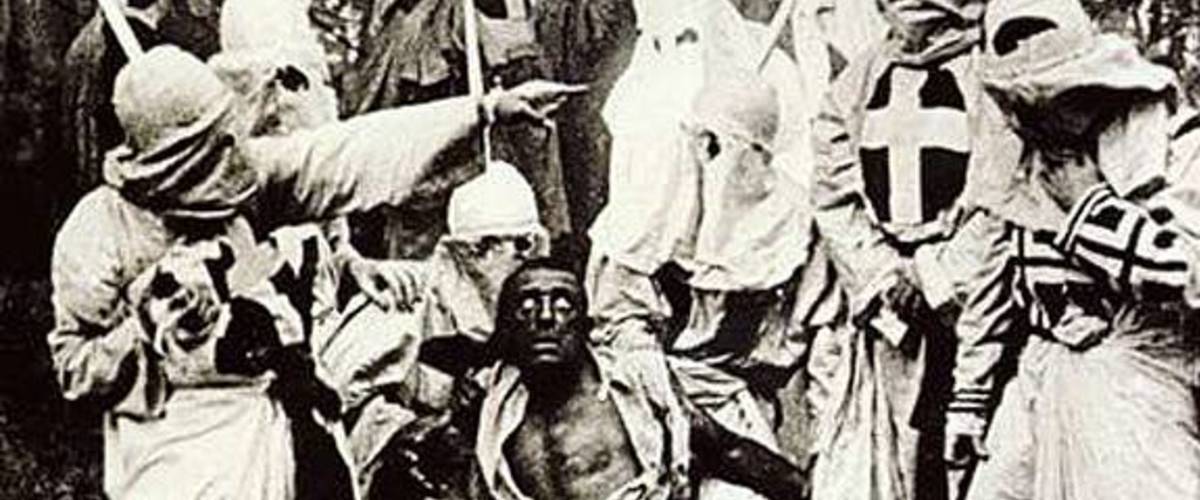
It is now 100 years since D.W. Griffith's "Birth of a Nation" caused both a revolution and a stir in the ever growing film industry. This is a film that is very hard to critique; on the one hand, it showed that films can be artistically challenging, and can far surpass the nickoledian novelties of otherwise taudry entertainments that was the norm back then (as commented on by Stanley Kubrick during his speech on receiving the award dedicated to Griffith. This was how I discovered Griffith, and it made me as fascinated by him as I am by Kubrick). On the other hand, it was the film to show that cinema can be a tool of manipulation and personal embellishment. There is no way of denying this after you see the distasteful nature of Southerners that is portrayed in the film itself.
I always loved what Roger Ebert said in his review of the film. He said "The Birth of a Nation is not a bad film because it argues for evil. Like Riefenstahl's "The Triumph of the Will" it is a great film that argues for evil. To learn how it does so is to learn a great deal about film, and even something about evil". I feel that this sentiment is the truest that has ever been applied to the film. The scary thing about it is that it does such a sterling job at portraying the Africans as evil and the Southerners as downtrodden. It is both a technical achievement, and the most malicious film I have ever seen. To get deeper into this, I will have to cover what the story is about.
In the 1860's, the nation was divided. You had the Camerons who were on the Southern side and the Stonemen who were on the North side. The character of Colonel Cameron (played by Henry B. Walthall, who had a really devilish appearance throughout) has fallen for the daughter of Austin Stoneman, Elsie (played by the immensely talented and adorable Lillian Gish), whose father is a strong proponent of Black men's rights. At this time, Abraham Lincoln is still the one in charge of the country, and as the Civil War rages on, things seem to be pretty content all in all. And then, at one of the plays Lincoln attends, he is shot and killed by John Wilkes Booth (played by Raoul Walsh, who directed Regeneration, which was a revolutionary gangster film, and he also directed the first film that John Wayne was in with the exception of his extra part in Noah's Arc). At this point, we come to the second act of the film which deals with Reconstruction, and this is where things take a turn for the worst. Austin Stoneman is now the one in power and orders the "evil" black people to raid havoc on the south. This is where most of the racist sentiment starts to become clear. There's even a scene where Colonel Cameron is looking disdainfully at another black man for simply walking on the same ground as him. How twisted is that? And then during one scene where there is a class of black men, they are shown as impudent and uneducated. It is not hard to see why this film really stirred up audiences back then when racism wasn't really a matter of discussion.
The one thing that is undeniable is that no matter how horrible some of the images are, it is impossible to keep your eyes away. I have seen the film three times (my third time bring today where I watched the first hour of it one day and then the other two hours of it today. It can be a real slog if you decide to watch it all on the one day), and through the wonderfully made documentary by Kevin Brownlow, and A Personal Journey with Martin Scorsese, many of the images are embedded in my head. The intimate moments like when Colonel Cameron comes out of the hospital and reunites with his family and as he comes closer to the house, you see the hand of his mother touching him. It is a sweet and humane moment that showed the power of framing and acting that Griffith managed to direct in an impeccable fashion. And when Cameron is on the battle field and sticks the flag into the canon just before he collapses. Wonderfully masked and elegantly shot.
And the way the KKK soar through the place as they seek revenge for what the North did to their sister is climactic and grandiose. The Ride of the Valkyires brings the ultimate sweep to the landscape as they ride on horseback, and though the connotations are reprehensible, the tension and execution of the scene itself is magnificent in every single way.
The problem is that while you do get scenes of technical proficiency and of emotional resonance, like you would expect, there are ones that evoke disgust. The worst has to be when they introduce Gus into the film. He is portrayed as the ultimate monster who wants to take advantage of a white girl. As Cameron's sister is drawn closer to him, she takes a leap off the cliff in one of the best intercut shots in the film. As you would expect, the KKK outrage at this and place the man on trial (as the picture above shows). And if that image didn't horrify you, then maybe the man's fate will.
To me, the most relatable character in the film is Elsie (Lillian Gish was given free reign and she did an amazing job at portraying a strong, yet scared character. Her loving moments are subtle and she
is one of the least melodramatic actresses of that era). In her mind, she comes to a crossroads. How can she love a man so vindictive against black people when her father is the proponent of Black men's rights? And as Lynch (the right hand man to Austin Stoneman)'s desire for her increases, she is then conflicted at all possible angles and it is such a shame to see that happen to her. If it weren't for the vindictiveness of the Reconstruction period, you would really be able to feel for Gish's character at that point, which is why I am that ambivalent about this section of the film.
And if you are telling us that black men in that time ruled over the South, then you are just trying to play with the Audience's mind. In a rerelease of "Birth" in 1930, Griffith remarked "Truth? What is the truth?". And I guess it is safe to say that the stubbornness of the Southerner and the idolization for his father took over the true facts of that time for him. But I am grateful for his contributions to the motion picture business, and I think it is a shame to see how people take it for granted nowadays.
If you ever wanted to learn about technique and editing in film (i.e. masking, split cutting, tracking shots, landscape shots and close ups), then this film is a must see, if you can excuse the running time and prejudiced nature of it. However, if you are easily offended and riled up by this kind of thing (or find Silent films hard to watch in general), then I would strongly suggest avoiding this one. If you are interested in seeing, then I suggest getting either Kino's or Eureka's versions since they have the crispest quality. I watched the original Kino DVD, which is still a really good version compared to some of the other public domain DVDs out there. I have heard that the VHS tape by Connoseuier is perhaps the best version of the film, but I have yet to see that at time of writing.
Griffith is a great filmmaker, and Intolerance and Way Down East are some of my favourite films ever made, and while those two films were not nearly as revolutionary as this one, and maybe not even as coherent, they were far more accessible and the techniques used in this film prevail in those two films, so there are many other ways to experience his craftsmanship even if you did ignore this film
"Birth" is an important film in history, and important to watch for its innovations, and I am glad that I have seen it. But the bad taste it leaves in my mouth makes it really hard for me to watch, the length of the film is really bogus, and it is difficult to recommend in all good faith. It is a mixed bag to say the least
Tuesday, 14 July 2015
Once Upon a Time in America (1984)

Sergio Leone was known as the master of the Spaghetti Western. His contemporaries like Federico Felini were very unique and never delved into specific genres. However, Leone, like his contemporaries, created a style all on his own. The close-up in a Leone film has so much impact that it gives you a sense of that character's emotions. We can feel that Clint Eastwood is serious about anybody being in his territory. And in Once Upon a Time in the West, we can feel the pain that Charles Bronson is going through as he faces his past. In many ways, the craft of his films really did shine in the Western genre, and he managed to establish an art that was once heralded by John Ford, and completely change the landscape for all Westerns to follow (such as Wild Bunch and Unforgiven, the film to change the entire morality of the characters in that timeframe). But for many years, he had wanted to tackle another genre. One that I feel cemented his legacy as one of the finest filmmakers to ever live. And that film was Once Upon a Time in America.
I think Once Upon a Time in America was the film that Leone was building up to for years. His knowledge on America and his I'm love for the book "The Hoods" made him want to make a gangster film, and this fervor took up a whole decade of his career. He eventually secured a producer, and convinced him to produce his magnum opus. The producer said that Leone had actually relayed the script in what seemed like 3hrs and 49 minutes, which was the running time of the film (taking the recent Extended Director's Cut out of account). He had already shot the film in his mind, and on the set, he would supposedly enact every single action that the young and Adult actors had to do. And you can see the delicacy of every movement in the film. Even moments like when the young Patsy (an uprising gangster) is eating a Charlotte Rouse, and he's trying to make it look like it hasn't been touched at all, so that he could give it to Peggy to achieve his desires with her, he can't stop the desire he has to eat the Charlotte Rouse, and this is like a trigger to the way gangsters lose control throughout the entire film. It is one of the simplest vignettes ever, yet it leaves such an impact.
I mentioned that Leone had to direct both young and Adult actors, and this lets me segue into the narrative structure of the film. It is set up in three different periods of time. You have the 1920's Prohibition era that focuses on the young uprising gangsters, how they hustle drunks for a bit of money, settle ordeals, how they got their liquor, and it establishes the crucial relationship between Noodles (the main character who is played by Robert De Niro in his adult years) and Max (the leader who is played by James Woods) and the power of both friendship and betrayal is represented throughout. Max is looking to build a massive empire, and Noodles just wants money, and the love of his life, Deborah (played by a young Jennifer Connelly and Elizabeth McGovern). As the years go on, these characters become tied to their own goals, and it becomes a very visceral experience. We see all Noodles desires is his beloved Deborah, who has higher hopes in life, and couldn't settle the on the one she loves, and even in prison, he couldn't stop fantasizing about her. Whereas Max's desire to succeed far surpasses any love he has for his woman, Carol (played by the wonderful Tuesday Weld), who takes it on the chin. Noodles, and his friends Patsy, Cockeye and Max are probably one of the first times that Jewish gangsters have been portrayed in film, and it provides a refreshing experience to behold. And we also have the 1960's where we see Noodles as an old man, riddled with grief, and left with nothing but his memories. Something has came to his attention though that has made him come back to his hometown after years spent in Buffalo (we can only assume what he was doing during that time).
Now while the film is set up in three different periods, it is the telling of the story that makes it so profound (which is the reason why the theatrical version of the film was such a disaster). See from the very beginning, we already suspect that Noodles is a wanted man, yet we haven't found out who he is yet. De Niro always manage to pull off an intense performance in his eyes, and as Ennio Morricone's splendidly resonant score takes place, we can feel that he is no longer the man that he used to be. In fact, in some ways the film could even be interpreted as a dream since there's so many connections to the opium den where Noodles goes to decompress. The use of transition such as the light fade out which brings us to a moment of revelation and the use of a Frisby to bring us back to the past is some of the most technically proficient moments of storytelling that I have ever witnessed and it makes me fall for the world that the film creates. It is a puzzle that rarely falls into place, and even with the Extended Director's Cut, it can still spellbound you by its power. The extended edition throws in some really interesting scenes like when Noodles is trying to find out who the mysterious person is, the origins of the cemetery where his friends were buried, and what happened when they went for a "swim". It even adds an extra layer of emotion to the reunion between Noodles and Deborah.
The use of "Yesterday" truly does bring a lot of the regret of Noodles' and Max's characters to the surface. They grew up together, yet their minds were in completely different places. And even in their Adult years before old age, you feel how withdrawn Noodles becomes with their heist operations. He even asks his friend after committing an extremely violent act: "Today they ask me to get rid of Joe; tomorrow they ask me to get rid of you? Is that okay with you? Because it's not okay with me". It is a battle between heart and mind, and the film does a tremendous job at absorbing us into that, whether we like the characters or not. 4hrs and 6 minutes of the film may be a bit long for some, but to experience a film like this is to experience the growth of a wonderful genre and the power of time itself. "When you are betrayed by a friend, you fight back".
Saturday, 29 November 2014
Stanley Kubrick Films: 2001: A Space Odyssey (1968)
If you know me well, then you will most certainly know that I have been a big Stanley Kubrick aficionado for at least 4 years now. His obsessive attention to detail, his painstaking labour in the art of motion pictures and his subversive nature in telling stories is simply a delight for me to see and hear. And I, for one, have never seen such a bonding of craft and workmanship in any body of work than I have in his films. Kubrick always delved into different genres, and in doing so, constantly shocked and surprised every one of his viewers. As Steven Spielberg stated in his "Look Back at Stanley" interview, Kubrick had this "fail safe button" where it is always impossible to turn off a Kubrick film. A subjective statement though it may be, I have always found a lot of truth with that. And the resonance of that truth couldn't be any truer than with his Sci-Fi epic that I will be reviewing today. His most important film will always be 2001: A Space Odyssey.
2001: A Space Odyssey is a film that was crafted with so much effort and love that each scene always elicits so many smiles from me. It was also a film I disliked when I first seen it. I knew of the greatness that it yielded since all subsequent Sci-Fi films (like Star Trek and Star Wars) were influenced monumentally by it (George Lucas even commented in the extras that he had wanted to make a film that would match the scale of 2001. And as the Star Wars films retain many references to their predecessors, it's no surprise that it took some conventions from that film) and it changed the form of conventional storytelling as we know it. But I was meandering through the film at first rather than embracing it. The Dawn of Man was very slow for me, and the Jupiter mission failed to interest me. But after that first viewing of the film, there was a compulsion to watch it again. The images of the Ships and Pods in Space as they slowly circulate was so jawdropping and enticing that I realised that this film was simply a completely different experience to any other film that I had ever seen. It wasn't a film that was inherently bad on any level. But it was certainly new territory for me, being a novice to Kubrick and films of the 50's and 60's. As repeated viewings commenced, I slowly realised that the film would become one of my top 20 favourite films of all time (and it was even my favourite film for a short while).
I decided to properly deconstruct this film now since I went to see the HD re-release that Glasgow Film Theatre are hosting from the 28th of November to the 4th of December. And it made me love the film even more. If you were ever tentative about seeing the film due to length, a lack of dialogue or for its ambiguous riddles that are littered throughout, then I seriously recommend watching it on the big screen. The opening with the eclipse as it gets highlighted by the sun was grandiose and it spellbound me throughout. I found that each scene on the big screen had the most minute of details such as being able to see people in colossal ships and even in the miniatures. You get this incredible depth of field as you travel through space. You feel the most tangible of details as you look at the Lunar surface from afar. There's a greater sense of progression by seeing it from afar because it doesn't make you feel lost in Space with the the people as they try to locate the mysterious Monolith. You feel like you are part of that quest as the camera angles, impeccable sound design and laboriously made sets give you the entire ambience of where our discovery takes us. And all of this ambience is aided by an incredible collection of classical music stemming from such artists like Johan Strauss and Legeti. There is many reasons why classical music, on a subconscious and psychological level, really appeals to me. But this film and Amadeus really embed these kinds of compositions in my head. Ligeti's powerful music emanates throughout the Jupiter mission section of the film, and it does a great job of establishing the base of each ship and planet. It is the epitome of Space Ballet to subconsciously tune you into the film's mood.
The film (for me) is broken up into 4 sections. The first section involves the Dawn of Man and how apes behaved in their own territory and the entire beauty of life back then. The second section involves the Jupiter mission that introduces Dr. Floyd who is secretly trying to find the Monolith buried under the Lunar surface. As the Monolith takes over, we then get the third section which establishes one of the most amazing characters of all time, HAL 9000. The third section involves the quest with Dave and Frank as they try and find the Monolith. As their resistance to the mission grows, HAL becomes increasingly more unstable in his decision making and as he controls the ship they are on, tries to cause havoc anyway he can. And the fourth section is the Monolith carrying us through this loopy trip into the complete unknown. Kubrick had collaborated with Douglas Trumbull (one of the people who helped out with the special effects) and in doing so, used a Pan and Scan effect that created trippy colours. Each region was mountainous, grainy and full of reflections. The images of Dave in this room as he ages within the scene is strange but never out of place. It is more proof of Kubrick's unconventional storytelling techniques and while the ambiguity of it may turn some off, it only heightened my interest of the entire film.
The film's pacing in these sections slows down and picks up speed at the right times. It allows you to embrace the Dawn of Man, while showing you their savage ways, their methods for foraging and how they treat eachother. The Jupiter section slows down the most, but it treats you to an effective musical composition and it slowly gets you accustomed to each fleeting ship and floating planet as we go on the voyage. It displays the beauty of cinema in its lighting and mystery. We always see what Dr. Floyd and his crew see, and we get just as beguiled by it as the others do. By the time we reached discovery, the third sections kicks in, leaving us clueless still. I love that because it makes the Monolith a plot device throughout the entire film, and keeps us waiting for what will happen next, which a lot of great directors are aware of. The third section is my favourite in the film because we get to see the simple days that go by with Dave, Frank and Hal here. The vertical shafts as you see Frank exercising, the sketching done by Dave and even virtual chess with Hal. And as it goes on, you can see Dave and Frank becoming more robotic in their processes, while Hal becomes more and more human as he begins to suspect their worries in carrying out this dangerous mission. Hal adds a completely different nuance since up to that point, the film had no real proper threat in it, outside of the Monolith. And it really shows a disturbing possibility that machinery will take over humanity. In a consumer world, where we all use phones, computers and tablets, it's safe to say we already rely on technology more than we may think. This film and "A Clockwork Orange" are definitely Kubrick's most realistic films in many ways, even with their surreal elements.
The fourth section is so memorable, and yet still shocking everytime you see it. We really get to the same emotional point that Dave does in abandoning all logic. What I love about this section is thinking what is out there and the possibility of deities way beyond. It makes you think as well as feel and the ending is so open-ended and feels a lot more like an introduction than an ending.
Overall, after watching it again at the GFT with amazing quality control, polish and detail, I can safely say that this film gets better and better the more I watch it. The documentary feel of the Dawn of Man complimented by amazing photography of each set, incredible direction that keeps us in a loop as we go on the quest, the shocking reality of Hal as a machine, the amazing collection of Classical music, the visual effects, especially near the end, and minute details hidden in space and within each interior, 2001 will always rank as my second favourite Kubrick film (behind Barry Lyndon) and one of my top 20 films of all time. Apart from some clothing decisions which date the film ever so slightly, the entire production has aged extremely well. My only real issues with the film would be that some of the acting is stilted, the apes look a little bit fake and some of the scenes where the pods float look a little out of place. But apart from that, it is a film that will transport you into its world.
Saturday, 21 July 2012
“The Dark Knight rises meets my ravenous expectations that it’s above the “Comic” label”
Lucas Bolton
Christopher Nolan is one of the most
universally lauded directors of this past decade. So many people have proclaimed him on the
pantheon with People like Fritz Lang, Howard Hawk, John Ford, F.W. Murneau
and even Spielberg – Nolan is part of a different category of directors. At once, he’s a shrewd business man who knows
that 3D doesn’t cultivate the viewing of a film if the film itself has the
right dimensions in sound and in visual.
And generally he’s a master writer and a craftsman of the highest axiom.
So obviously I went to see “The Dark
Knight Rises” at the cinema. It was cued
outside to such an extent that I had such trepidation about going in. So the chief person in the theatre gave me
free access due to my Asperger’s Syndrome, but not to sit rather just to get
out the atmosphere, albeit I was the first Person to sit. Essentially it was so that I could occupy a seat
at the end of isle 3 without anybody purloining the seat and chiefly so that
only the Person I went with sat next to me rather than any other marginal
Person as I find that uncomfortable.
I emphasise this atmosphere so that I
can lucidly articulate the sheer extent of Nolan’s postponing of a film for 4
years. In a way, breaking that gap up
with the wondrous mindscape “Inception” not only gave People something to chew,
but also made Nolan’s film the modern version of Citizen Kane – copied, but
never imitated – or like Metropolis – Modern and bold, part of both gothic pop
rock and the helm of Sci-Fi. Inception
was the film that made me aware that Nolan’s sometimes inscrutable narrative
and thoroughly mapped out character development was the key component into how
his Batman films are so revered.
Subsequently watching Inception, I then thought that he could never top
it or even make another great film. “The
Dark Knight” and “Inception” stand for something more than just films. “Inception”
was like “2001: A Space Odyssey” (which Nolan loves) and something more akin to
Ingmar Bergman’s “Persona” whereby it questions our constant loopholes in the
world, how routine is almost an endless pool of the same thing like “Limbo” and
how the fantasy vs reality of a film is comparable to the visual of our
world. The questions are ambiguous due
to the divisive open-ended ending, which is what Nolan is great at; provoking
thought. “The Dark Knight” questions our sanctimonious morality in how one Man
can be so demoralized by another that it’s almost incomprehensible to us how we
respond to such psychological torture.
Christian Bale was coming of age in that film, still playing the
philanthropic, party boy bachelor while also debunking frauds and going through
trial and error with nuances and depth.
In short, I thought Bale was never
what you would call a “Method Actor”. His stamina and physical commitment to
the role is sublime, but his raspy, jarred cadences could sometimes undermine
an otherwise formidable vigilante. But
with “The Dark Knight Rises” still percolating in my mind, what I have come to
realize is that Bale’s abilities, tones and voice come from his almost devout
dedication to the role. I understood the
character less in this film and I think that was for the better, whereas in “The
Dark Knight” part of the reason why Heath Ledger was so revered was because you
barely knew him. All you knew was that
he blamed the world for his madness, whilst simultaneously trying to afflict
it, for People to be in an empathy machine.
His plans were so cryptic that it kept you hypothesising and thinking
about how you would react to the situation.
It reminds one of Alan Moore’s “The Killing Joke” in relation to the
Joker’s monologue. It kept me thinking
so much that I had to read that Graphic Novel in order to get a perspicacious
view into this dark and tormented mind.
But the strange thing is, as much as
I love The Joker (The Nicholson, the Mark Hamill one, The Cesare Romero (for
sentimental value!) and Heath Ledger one) and so many other people do, he’s not
my favourite Batman villain. I
eventually came to loving Bane more than Batman after playing “Batman Arkham
Asylum” where he’s juiced up by Titan chemicals. This was it for me – when I heard Tom Hardy
from Bronson and who played Eames in Inception was going to occupy the role I
already preconceived the film as Nolan’s magnum opus and my personal
favourite.
Tom Hardy was so physically adroit
and so menacing in his portrayal. His
eyes had no soul what so ever, but his voice encompassed all of the emotive
power that the actor had to convey.
One of the rare things to find in
Dramas like this is your understanding of the villains. This plays off other characters
brilliantly. The Bane In this film was
not a generic monster as he had been so woefully interpreted by in “Batman and
Robin” or a “sidekick”. He was a Man
that had to survive in The League of the Shadows. It questions the genesis of all villains and
Bane is no exception. In trying to make
the best out of his situation, his mind could never recover and his power could
wreath upon Gotham City as Rah’s Al Ghul had wanted.
Bane has to try and find a way for
Bruce Wayne’s fusion reactor to detonate the whole city. Fox and him were the only ones who had known
about it, whereas everybody else was mainly ignorant. But whereas this was made to try and preserve
the energy and help the People of Gotham City, it has put Bruce Wayne in
financial decrepitude and made him reputed to be a recluse. The risks were so great, but Bane could take
these risks if it was an unstable device.
Deep underground his plans of snuffing out Bruce Wayne from his
fantastically gothic and unlikely cave would sure to be a success with the
havoc he’s causing.
I also couldn’t help, but find that
the Alfred is so profoundly great in this film that you hate him. Like the way you would just say “I hate you”
without meaning it. I verily believe
that this is Cane’s best role; in the other films, he was more enthused to help
Batman to get him to protect a city and to serve for a purpose without
failure. Not just a Man in a costume,
but rather one of the higher respected Men in authority. Cane doesn’t move that way in this film. He can be cantankerous and full of
emotion. At some points you understand
why he did what he did and then in others you want to know more. That’s film as a telepathic machine, very
much like “Sunrise” or any of Borzage’s films.
They penetrate deep into your spirit, which is greatly emphasised in The
League of Shadows as well.
If you had went to see Marvel’s “The
Avengers” this year and were impressed by Joss Whedon’s alacrity in the writing
and the amazingly cast roles that’s great.
But taking a look at this film and the way it conveys its deeply
grounded narrative, in the same light as Frank Miller’s “Dark Knight Returns”
and combining past films, you’ll start thinking that The Avengers was a comical
film of great quality, but it didn’t handle as many adult dilemmas as
Christopher Nolan’s film does.
And also we have Anna Hathaway
playing Selina Kyle/Catwoman . I love
how we don’t have origins as we did in “Batman Returns”. She was always a masterful “Cat” Burglar who
knew ways of getting into safes and vaults and how to fight off highbrow Men and
People of high standards. I have a
special penchant for “Batman Returns” (or you could say a guilty pleasure!),
but I was never satisfied with the superficiality to Kyle’s transition into
being Catwoman. It was rushed and
flaccid. The atmosphere and the deep
dark shadows though gave it a fascinating quality. Hathaway’s portrayal though proves how
iconic Pfeiffer was in the role, while also staying original. She’s a crook, but one with purpose. Her diverse morality was great as well – how she would say that her and Batman were saps for staying in a place where you don’t get what
you should be reciprocated, while initially hesitating to do anything for Gotham being greatly persuaded by Bruce Wayne.
Joseph Gordon Levitt was a powerhouse
actor in this film, as was Gary Oldman, Morgan Freeman and Marion Cotillard. Gary Oldman was definitely proving himself to
be more than just Comissioner Gordon in this film. This is what you would envision a dedicated
citizen to be and a deeply corrupting Man below the height of his
authority. There’s a real sense of “The
Dark Knight Returns” when you see how he’s depicted storywise.
As well as the people that populate,
Gotham City is a valid world just as Joh Frederson’s world in Metropolis is,
the world in Blade Runner and the skewed world in Bernardno Bertoluccio’s “The
Conformist”. It’s so rich and detailed
and where they chose to shoot the film in places like Glasgow and so forth was
even more enticing as our illusion of reality gets reiterated even more. Each composition of the film makes you aware
of the key to lighting Batman and my favourite moments with Bruce Wayne are
when he’s in that cavernously lit cave trying to trace back the address to
Selina Kyle where Alfred makes his frank speech.
In other words, Christian Bale in
this film has become the modern version of Batman to me. I will always retain my love for Keaton’s
portrayal and consider Batman 1989 to be one of my favourite films for
different reasons. But this film tops it
in my opinion. Its planes of focus on hypocrisy,
the enigma of Bruce Wayne and how everybody thinks they know him, as well as detailed
storylines interlinked with Bane – a burly, Darth Vader and Vincent Price voiced-like character with so much grounded intellect.
You get a feeling that “The Clean Slate” Selina wants is metaphorical to
what Wayne’s done to himself and the monumentally thrilling combat and brawns
in Bane and Batman perfectly complement each other and slowly subside in the 2nd
to 3rd act.
If your faith in modern cinema is
defaulting, go check out this masterpiece for it gives a cinema a higher
ranking still.
Subscribe to:
Posts (Atom)